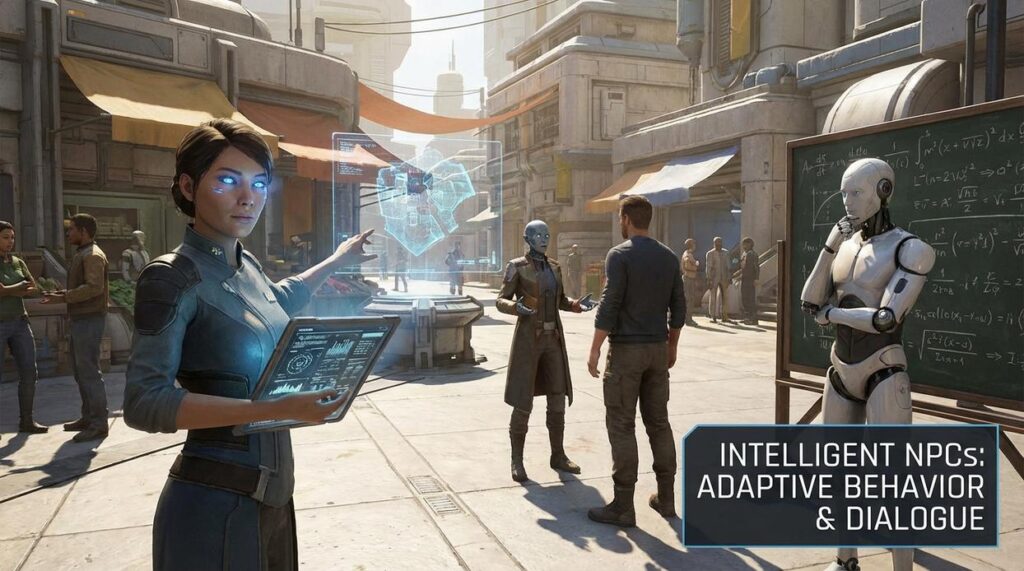
Artificial intelligence is no longer a background feature in modern gaming—it’s shaping how we play, compete, and experience virtual worlds. If you’re searching for clear insights into ai in video games, you’re likely wondering how it actually impacts gameplay, esports performance, and even the gear you choose. This article breaks down the real mechanics behind AI-driven systems, from smarter NPC behavior and adaptive difficulty to advanced analytics used by competitive teams.
We focus on what matters to players: how AI changes core gameplay loops, influences multiplayer balance, and creates new strategic layers in both casual and professional scenes. Drawing on in-depth analysis of current titles, developer implementations, and competitive trends, this guide cuts through the hype to explain what’s practical, what’s emerging, and what it means for your performance. Whether you’re optimizing your setup or mastering competitive play, you’ll gain a clearer understanding of where AI is pushing gaming next.
Few gaming moments sting like being outsmarted by an enemy in The Last of Us or stumbling onto a bizarre new planet in No Man’s Sky. Those experiences feel magical. In reality, they’re powered by systems working behind the curtain.
Game development is complex because every character, world, and reaction could be built by hand. That means years of coding, art, and testing.
So what’s the solution? ai in video games.
In simple terms, artificial intelligence means algorithms—step-by-step rules—that let software make decisions.
Developers use it to:
- Control enemy behavior
- Generate vast landscapes
- Automate playtesting
Powerful stuff.
Beyond Basic Bots: Crafting Intelligent In-Game Characters

Once upon a time, enemies followed loops. Think of the “Pac-Man” ghosts: predictable paths, escalating speed, rinse and repeat. Fun? Absolutely. Intelligent? Not quite. As one veteran designer joked in a GDC panel, “They weren’t hunting you—they were running a script.” And yet, that simplicity laid the groundwork for what ai in video games would eventually become.
Today, NPCs evaluate, adapt, and sometimes even surprise their creators. So how does that leap happen?
First, the foundations:
- Finite State Machines (FSMs): NPCs switch between defined states like patrol, chase, or flee. If health drops below 30%, transition to retreat. Clean. Efficient. Predictable.
- Behavior Trees: A hierarchical decision system that lets characters weigh options dynamically. Instead of “if this, then that,” it asks, “What’s my best option right now?” (Much closer to how humans improvise.)
Consequently, tactical shooters feel alive. In games like Rainbow Six Siege, enemies call out, “Contact front!” and reposition. One developer explained, “We wanted players to feel hunted back.” Enemies flank, suppress with fire, and use cover—not because it’s scripted, but because their systems allow coordination.
Meanwhile, companions have evolved too. Compare early escort missions (painfully passive) to Ellie in The Last of Us. She whispers, “I’ve got your back,” and actually means it—throwing bricks, reacting emotionally, even commenting on scenery. As creative director Neil Druckmann noted, “Believability comes from reaction.”
Ultimately, intelligent NPCs transform mechanics into stories—unscripted, reactive, and memorably human.
Procedural Content Generation (PCG) is the practice of creating game assets—levels, maps, quests, even loot—through algorithms instead of hand-building every detail. In simple terms, developers write rules, and the system produces content that follows them. Think Builder A placing every tree manually versus Builder B designing a smart system that plants forests automatically. The second approach scales fast.
When it comes to environments, the difference is dramatic. A handcrafted dungeon offers tight control and cinematic pacing. Meanwhile, a PCG-driven dungeon can reshuffle layouts endlessly, boosting replayability. Diablo’s shifting dungeon floors and Minecraft’s near-infinite terrain show how ai in video games can generate massive, unique spaces that feel fresh each run. You’re not just replaying a level—you’re rediscovering it (like opening a new multiverse portal every time).
However, critics argue procedural worlds feel random or soulless. That’s fair—pure randomness can break pacing or trap players in dead ends. This is where the AI “curator” steps in. Rather than rolling digital dice blindly, it enforces rules: clear paths to exits, balanced enemy placement, and coherent biome transitions. In other words, it’s less chaos engine, more invisible dungeon master ensuring the adventure actually works.
Developers have a secret weapon, and it is not just bigger teams or longer crunch hours. It is AI.
First, consider automated quality assurance. Instead of relying solely on human testers, studios deploy AI “players” that run through a game thousands of times. These systems simulate real inputs, stress obscure edge cases, and deliberately try to break mechanics. Quality assurance, or QA, means systematically testing software for bugs and crashes. An AI agent can uncover exploits a human might miss after their hundredth dungeon run. What’s next? Expect studios to connect these bots directly to live builds so issues are flagged before players ever download a patch.
Next comes AI-powered balancing. Competitive titles like League of Legends and Valorant generate millions of match data points. By analyzing win rates, damage outputs, and ability usage, developers can tune numbers. Some critics argue this over-optimizes the meta and strips away happy accidents. Fair point. However, without large-scale data modeling, dominant strategies would calcify even faster. The future likely blends statistical insights with designer intuition.
Meanwhile, performance gets a boost from technologies such as NVIDIA’s DLSS and AMD’s FSR. These systems use machine learning to upscale lower-resolution frames into sharper images, increasing frame rates without frying your GPU. In short, ai in video games is not just about smarter enemies; it is about smoother experiences.
Finally, artists benefit too. AI-assisted tools generate textures, animations, and environmental drafts, freeing creatives to refine style and storytelling.
the rise of cross platform play benefits and challenges
The next frontier of ai in video games isn’t prettier graphics; it’s smarter worlds. First, imagine NPCs who hold unscripted conversations, remembering your choices and reacting naturally (yes, like Westworld, but hopefully less murderous). That means deeper immersion and fewer recycled dialogue trees.
Meanwhile, adaptive AI Directors can tune difficulty in real time, keeping you challenged without rage-quitting. The benefit? Flow—the sweet spot between boredom and frustration, defined by psychologist Mihaly Csikszentmihalyi.
Finally, procedural quest engines could craft personalized storylines for every player. In other words, your adventure becomes truly yours—more replay value, more surprise, more stories worth sharing worldwide.
Artificial intelligence has quietly transformed gaming:
- Smarter NPCs adapt to your tactics, making victories feel earned rather than scripted.
- Procedural content generation builds bigger worlds without copy‑paste fatigue.
- Automation tools squash bugs and balance systems faster, so launches feel smoother.
In other words, ai in video games isn’t just a flashy add‑on; it’s a creative engine. Developers gain time to experiment, and you get richer stories, sharper competition, and fewer immersion-breaking glitches.
Looking ahead, as algorithms evolve, the gap between prewritten quests and living worlds will narrow—unlocking experiences that react, surprise, and grow alongside you even more.
Level Up Your Next Gaming Experience
You came here to understand how ai in video games is shaping the way you play, compete, and experience modern titles — and now you’ve seen exactly how it impacts smarter NPCs, adaptive difficulty, esports strategy, and even gear optimization.
The reality is simple: if you ignore these advancements, you fall behind. Whether you’re grinding ranked ladders, refining your mechanics, or optimizing your setup, understanding how AI systems influence gameplay is no longer optional — it’s a competitive edge.
Now it’s time to act. Start analyzing the games you play through the lens of AI-driven mechanics. Adjust your strategies. Optimize your loadouts. Stay ahead of patches and meta shifts powered by evolving AI systems.
Serious players don’t wait for the meta to define them — they study it and get ahead of it. Join thousands of competitive gamers who rely on our in-depth breakdowns, esports insights, and performance optimization guides to sharpen their edge.
Don’t just play the game. Master the system behind it. Dive into the latest insights now and start winning smarter.