
If you’re wondering what gaming will actually look like in the next year, you’re not alone. Hype cycles, flashy tech demos, and bold marketing promises make it hard to separate short-lived fads from real change. This breakdown of gaming industry trends 2026 cuts through the noise to focus on what will genuinely shape how we play—across technology, monetization, competitive ecosystems, and core gameplay design. Built on years of analyzing gameplay systems and tracking market shifts, this article zeroes in on practical, high-impact developments so you can clearly see what’s coming—and what’s just marketing smoke.
Generative AI: The Unseen Hand in World-Building
Generative AI is quietly reshaping how game worlds breathe, react, and remember. If you care about immersion, this is the shift to watch.
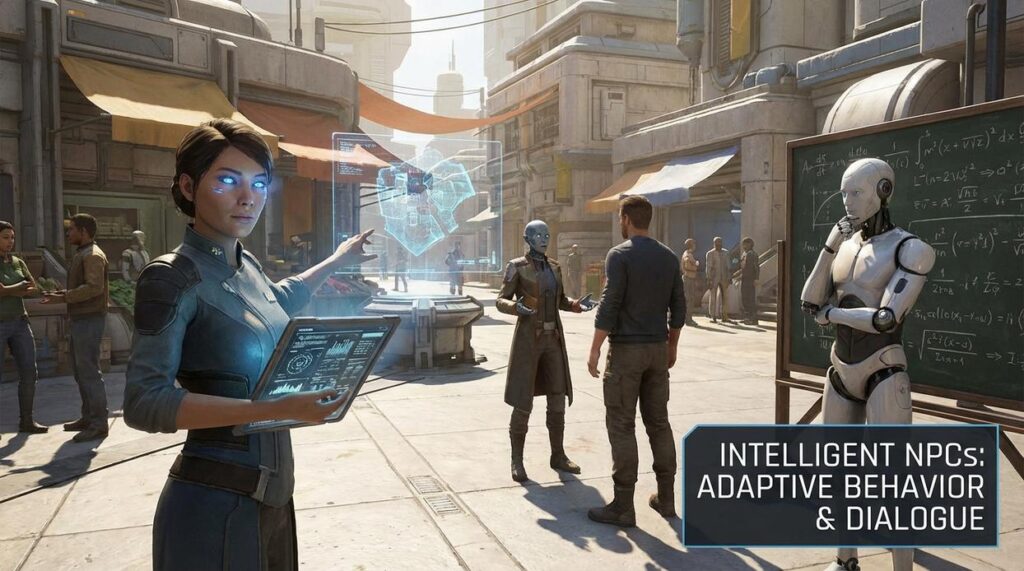
Dynamic NPCs and Questlines are the clearest leap forward. Instead of pre-scripted dialogue trees (those rigid conversation branches you’ve memorized since Skyrim), large language models (LLMs)—AI systems trained on massive text datasets—enable characters to respond contextually. That means a shopkeeper who remembers you stole last week. Or a rival who adapts their trash talk to your actual playstyle. Some critics argue this risks incoherent storytelling. Fair. But with guardrails and lore constraints, studios are already producing interactions that feel closer to tabletop RPG sessions than theme park rides (and yes, your Bard shenanigans might finally pay off).
Procedural Content Generation 2.0 goes beyond random terrain. Procedural generation means algorithmically creating content instead of handcrafting every asset. Now, AI can build narratively consistent dungeons and evolving side quests on the fly. According to industry analyses from GDC panels (2025), replayability is becoming a key monetization driver—aligning directly with gaming industry trends 2026.
Smart Player Assistance is where I recommend you lean in. Look for games offering:
- Adaptive AI tutors that analyze mistakes in real time
- Context-aware combat suggestions
- Strategy nudges that stay in-universe
Pro tip: Enable assist layers early; they often accelerate mastery without diluting challenge.
Skeptics fear hand-holding. But when done right, it’s less “easy mode” and more personalized coach—think Jarvis, not autopilot.
The New Reality: Hardware, Cloud, and Immersion
The Mid-Generation Leap
The arrival of PS5 Pro and upgraded Xbox models signals more than a routine refresh. Historically, mid-cycle upgrades drive measurable shifts in performance standards. The PS4 Pro, for example, accelerated 4K adoption, with over 20% of PS4 owners upgrading within three years (Sony earnings reports). Analysts at Ampere predict that by late 2026, over 35% of active console users will be on enhanced hardware. That install base makes 4K/60fps with advanced ray tracing less of a luxury and more of a baseline expectation. Developers optimize for where the players are—and increasingly, they’re on higher-spec systems.
Skeptics argue mid-gen upgrades fragment audiences. Yet cross-gen development tools and scalable engines like Unreal Engine 5 mitigate that risk, allowing performance tiers without splitting communities.
Cloud Gaming Matures
Cloud gaming once struggled with latency and bandwidth caps. In 2025, global average internet speeds surpassed 150 Mbps (Speedtest Global Index), reducing input lag to sub-20ms in supported regions. That’s within competitive range for many genres. Rather than replacing consoles, cloud platforms now emphasize:
- Instant access without downloads
- Play across phones, TVs, and low-end PCs
- Subscription-based libraries
It’s convenience over conquest—Netflix, not a console killer.
Practical Mixed Reality (XR)
Standalone VR headsets have dropped below $400 while doubling GPU efficiency since 2022 (IDC data). That affordability fuels deeper integration into mainstream titles. Instead of tech demos, we’re seeing persistent gameplay loops—fitness RPG hybrids, tactical shooters with spatial mapping, social hubs that feel closer to Ready Player One than Wii Sports.
Among gaming industry trends 2026, immersion is no longer experimental. It’s measurable, scalable, and increasingly standard.
Evolving Economies: How We Pay and Play

Subscription consolidation is inevitable. The “Netflix for games” race will favor platforms that secure day-one releases (new titles available the same day they launch at retail) and offer tightly curated catalogs instead of bloated libraries. Xbox Game Pass proved the power of day-one drops (Microsoft, 2024 earnings reports), but sustainability hinges on balancing licensing costs with retention. My recommendation: choose services that consistently deliver new first-party titles and rotate high-quality indies quarterly. Depth beats volume.
User-generated content (UGC)—player-built levels, cosmetics, and modes—has already minted millionaires in Fortnite (Epic Games Creator Economy 2.0, 2023). Expect AAA studios to integrate robust creator suites directly into engines, expanding monetization splits. If you’re creatively inclined, start building now. Treat it like YouTube in 2010 (yes, really). Early adopters win network effects.
As for Web3, the hype cycle cooled (DappRadar, 2023), but the core idea—verifiable digital ownership—remains compelling. Cross-game item utility and transparent marketplaces could reduce fraud and improve resale rights. Be pragmatic: prioritize games where blockchain enhances gameplay, not speculation. For deeper context, see how ai is transforming modern video games.
Among gaming industry trends 2026, economic models—not graphics—will define winners. Choose ecosystems, not just games.
The Future of Competition: Esports and Community
First, grassroots and collegiate esports are no longer side quests—they’re the main storyline. From high school leagues in Texas to collegiate circuits like NACE and Tespa, developer-backed tournament tools are lowering barriers to entry. In other words, better APIs (application programming interfaces that let software systems talk to each other) and automated bracket platforms mean local LAN organizers can run events that feel LCS-ready. Some argue the pro scene will always dominate attention. However, history—from traditional sports farm systems to Seoul’s PC bang pipeline—shows talent thrives when community ecosystems are strong.
Meanwhile, seamless spectator integration is becoming standard. Built-in observer modes, real-time stat overlays, and prediction mechanics mirror gaming industry trends 2026 and keep fans engaged beyond Twitch chat spam (yes, “Pog” still lives). Critics worry betting integrations blur ethical lines. That’s fair. Yet with regulation and transparency, engagement tools can deepen fan literacy.
Finally, the creator-athlete hybrid is inevitable. Pros who stream, vlog, and post patch breakdowns build durable brands. Skill wins matches; personality builds legacies.
Gearing Up for Gaming’s Next Chapter
You came here to understand where gaming is headed—and now you have a clear view of the forces shaping it. From AI-driven worlds to smarter hardware, evolving monetization, and explosive esports growth, the gaming industry trends 2026 point toward more dynamic, accessible, and player-driven experiences.
The real challenge? Keeping up before you fall behind. As platforms evolve and new titles redefine entire genres, missing these shifts could mean missing out on the next big wave.
Stay ahead of the curve. Dive deeper into emerging trends, upgrade your setup strategically, and track the games positioned to dominate. The future of play is forming now—make sure you’re ready to level up with it.
 Esports Analyst & Content Strategist
Ask Jose Rayombers how they got into core gameplay mechanics and strategies and you'll probably get a longer answer than you expected. The short version: Jose started doing it, got genuinely hooked, and at some point realized they had accumulated enough hard-won knowledge that it would be a waste not to share it. So they started writing.
What makes Jose worth reading is that they skips the obvious stuff. Nobody needs another surface-level take on Core Gameplay Mechanics and Strategies, Esports Team Insights, Gaming Gear Optimization Tips. What readers actually want is the nuance — the part that only becomes clear after you've made a few mistakes and figured out why. That's the territory Jose operates in. The writing is direct, occasionally blunt, and always built around what's actually true rather than what sounds good in an article. They has little patience for filler, which means they's pieces tend to be denser with real information than the average post on the same subject.
Jose doesn't write to impress anyone. They writes because they has things to say that they genuinely thinks people should hear. That motivation — basic as it sounds — produces something noticeably different from content written for clicks or word count. Readers pick up on it. The comments on Jose's work tend to reflect that.
Esports Analyst & Content Strategist
Ask Jose Rayombers how they got into core gameplay mechanics and strategies and you'll probably get a longer answer than you expected. The short version: Jose started doing it, got genuinely hooked, and at some point realized they had accumulated enough hard-won knowledge that it would be a waste not to share it. So they started writing.
What makes Jose worth reading is that they skips the obvious stuff. Nobody needs another surface-level take on Core Gameplay Mechanics and Strategies, Esports Team Insights, Gaming Gear Optimization Tips. What readers actually want is the nuance — the part that only becomes clear after you've made a few mistakes and figured out why. That's the territory Jose operates in. The writing is direct, occasionally blunt, and always built around what's actually true rather than what sounds good in an article. They has little patience for filler, which means they's pieces tend to be denser with real information than the average post on the same subject.
Jose doesn't write to impress anyone. They writes because they has things to say that they genuinely thinks people should hear. That motivation — basic as it sounds — produces something noticeably different from content written for clicks or word count. Readers pick up on it. The comments on Jose's work tend to reflect that.